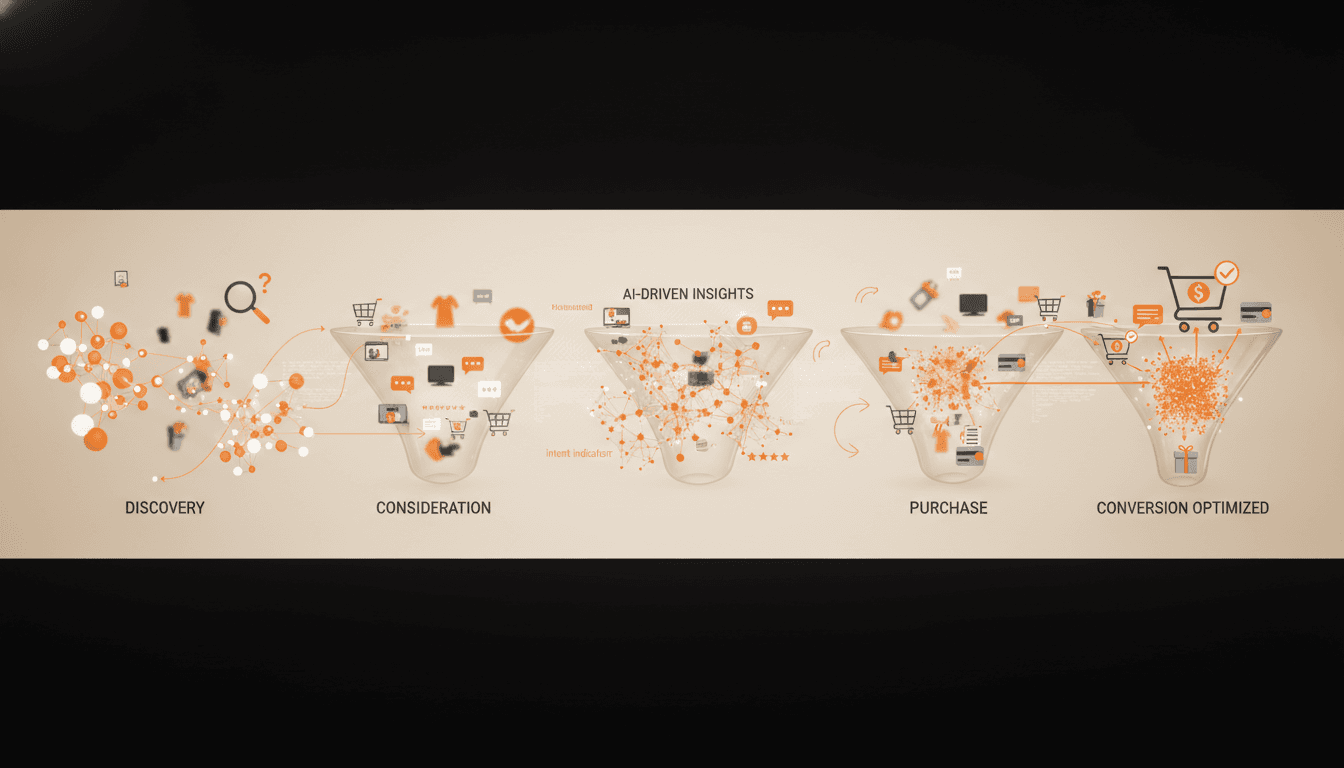
Demystifying Medium-Intent AI Search Queries: A 2024 Guide for E-Commerce Marketers
In 2024, medium-intent AI search queries shape nearly half of e-commerce discovery, yet many brands miss the mark on optimization. This comprehensive guide reveals how AI interprets these nuanced queries—and how your e-commerce content can win more recommendations, rankings, and conversions.

Demystifying Medium-Intent AI Search Queries: A 2024 Guide for E-Commerce Marketers
In 2024, medium-intent AI search queries drive nearly half of e-commerce product discovery—yet many brands still miss critical optimization opportunities. This comprehensive guide uncovers how AI interprets these nuanced queries and reveals actionable strategies to help your e-commerce content secure more recommendations, higher rankings, and increased conversions.
[IMG: Abstract graphic illustrating AI-powered search with product comparison elements]
In 2024, medium-intent AI search queries now comprise 40% of e-commerce search volume, but many marketers find it challenging to create content that truly resonates with these complex user needs (Hexagon AI Search Trends Report). Gaining a deep understanding of how AI models interpret these queries opens the door to powerful opportunities for boosting product discovery and driving sales. This guide breaks down what medium-intent AI search entails, why it’s pivotal for your e-commerce strategy, and how to craft content that ranks higher and converts better in AI-driven search environments.
Ready to transform your e-commerce strategy with AI-optimized content? Book a free 30-minute consultation with Hexagon’s AI marketing experts today to get started.
Understanding Medium-Intent AI Search Queries: Definition and Examples
Medium-intent AI search queries form the backbone of today’s e-commerce discovery landscape. These queries—neither purely informational nor strictly transactional—indicate that a shopper is actively comparing options or evaluating alternatives. Indeed, medium-intent queries now account for 40% of total e-commerce search volume (Hexagon AI Search Trends Report).
What sets medium-intent queries apart from low- and high-intent?
- Low-intent queries tend to be broad and exploratory, such as “running shoes,” reflecting early-stage browsing or vague interest.
- High-intent queries are highly specific and action-oriented, like “buy Nike Air Zoom Pegasus 40 size 10.”
- Medium-intent queries fall in the middle, showing that shoppers are weighing options and seeking reassurance before committing.
Consider these examples of medium-intent queries:
- “Best running shoes for flat feet”
- “Compare air fryers vs convection ovens”
- “Top-rated noise cancelling headphones 2024”
- “Affordable stand mixers with dough hook”
These searches reveal consumers in the consideration or evaluation phase of their buying journey—ready to move beyond casual browsing but not yet prepared to purchase. As Dr. Emily Chen, Head of AI Search at Hexagon, explains,
“Medium-intent queries like ‘best running shoes for flat feet’ mark a critical point in the consumer journey. AI models today excel at interpreting these queries to recommend brands that offer trustworthy, structured, and comparative content.”
[IMG: Flowchart showing user journey: low intent → medium intent (comparison/evaluation) → high intent]
Medium-intent queries often include qualifiers such as:
- “Best”
- “Compare”
- “Top-rated”
- “For [specific need or audience]”
- “Pros and cons”
According to Gartner, medium-intent searchers are typically in the comparison, evaluation, or consideration phases, making this segment essential for brands aiming to capture purchase-ready traffic. Mastering these queries is the first step toward significant gains in both visibility and conversion.
How AI Models Interpret Medium-Intent Queries in E-Commerce
AI models have advanced considerably in interpreting user queries with subtlety and precision. Through sophisticated intent detection and contextual analysis, AI engines differentiate medium-intent queries from low- and high-intent types, tailoring recommendations to fit the shopper’s current mindset.
Here’s how AI models decode these queries:
- Natural Language Understanding (NLU): AI identifies key qualifiers like “best” or “compare” to infer the user’s position in the buyer journey.
- Contextual embeddings: Technologies such as ChatGPT and Perplexity analyze keyword relationships and context, mapping queries to precise product categories and shopper needs (OpenAI Technical Paper).
- Intent classification: AI categorizes user intent, enabling search engines to surface content that best addresses medium-intent needs—such as detailed comparisons, expert reviews, and structured product data.
For instance, when a shopper types “compare electric vs gas lawn mowers,” the AI:
- Recognizes the query as comparative and medium-intent
- Searches for content offering side-by-side specifications, pros and cons, and user reviews
- Prioritizes authoritative sites citing expert opinions and verified user feedback
The data underscores this trend:
- AI models are 2.5x more likely to recommend products for medium-intent queries than for low-intent ones (Hexagon AI Query Intent Study).
- Generative AI engines now influence over 25% of all e-commerce product discovery journeys in the US (McKinsey Digital).
Dr. Arjun Patel, Research Scientist at Google DeepMind, emphasizes,
“AI assistants are no longer just answering direct purchase queries—they increasingly guide users through the evaluation process, making content tailored for medium-intent searches a crucial lever for brand exposure.”
[IMG: Visualization of AI assistant parsing a medium-intent query and surfacing comparison content]
AI’s ability to discern nuanced intent demands that brands move beyond keyword stuffing. Instead, content must be thoughtfully structured and credible, catering to the comparative and evaluative mindset of today’s e-commerce shoppers. Brands that grasp how AI models interpret and recommend content for these queries stand to lead in the evolving product discovery landscape.
The Growing Importance of Medium-Intent Queries in the E-Commerce Customer Journey
Medium-intent queries have moved beyond niche relevance—they now capture the most pivotal phase in the e-commerce customer journey: evaluation and consideration. This shift holds substantial implications for your brand’s visibility and conversion potential.
- Shoppers using medium-intent queries are actively comparing options, seeking reassurance, and narrowing their choices.
- Content aligned with medium-intent queries ranks three times higher in AI assistant recommendations (Hexagon Internal Benchmarking Data).
- Brands that structure content around user intent see a 28% increase in organic AI-driven traffic (HubSpot State of AI Content 2024).
Take the query “best air purifiers for allergies” as an example. Here, users expect authoritative breakdowns, side-by-side comparisons, and validation from credible sources. AI assistants now shepherd these shoppers through the evaluation maze, spotlighting brands that provide in-depth, trustworthy content.
[IMG: Customer journey map highlighting the evaluation phase and AI assistant touchpoints]
Brands capitalizing on this phase gain:
- Higher placement in AI-powered product recommendations
- Enhanced trust and authority with buyers still undecided
- Increased conversion likelihood by meeting shoppers exactly where they are in their journey
Brian Burke, VP of Research at Gartner, summarizes,
“The brands winning in AI-powered discovery are those who optimize not just for keywords, but for the true intent behind user queries—especially during research and comparison phases.”
Best Practices for Structuring Content to Align with Medium-Intent AI Search
Success in AI-powered search requires more than selecting the right keywords. Brands must design content that satisfies the comparative, evaluative nature of medium-intent queries while signaling credibility and trustworthiness to AI engines.
Here’s how to structure your content for maximum impact:
1. Use Comparison Tables for Product Evaluations
- Develop clear, side-by-side tables comparing features, specifications, pricing, and benefits.
- Highlight unique attributes that differentiate each product, simplifying assessment for AI and shoppers alike.
- Include commonly compared factors such as warranty, energy efficiency, and suitability for specific needs.
[IMG: Example of a product comparison table: “Blenders for Smoothies – Side-by-Side Specs”]
2. Incorporate Expert Reviews and Detailed FAQs
- Showcase expert opinions and reviews from reputable sources to build authority.
- Create comprehensive FAQ sections addressing frequent comparison and evaluation questions.
- Feature real customer testimonials and verified user feedback to enhance credibility.
3. Leverage Structured Data and Schema Markup
- Implement structured data (Schema.org markup) to help AI models accurately extract and interpret product attributes, ratings, and comparisons.
- Use FAQ, Review, and Product schema types to increase your chances of appearing in AI-powered recommendations.
4. Create Trust Signals to Enhance Brand Credibility
- Display third-party certifications, expert endorsements, and trust badges prominently.
- Highlight awards, guarantees, and transparent return policies.
- Cite credible sources and provide links to authoritative references.
Structured data and trust signals are increasingly rewarded in AI search for medium-intent queries (Forrester Research, 2024). AI assistants prioritize content that answers queries transparently and authoritatively. As Samantha Lee, Principal Analyst at Forrester, observes,
“Generative Engine Optimization is the new frontier for e-commerce marketers. Aligning content with the nuanced intent AI models detect is essential for both visibility and trust.”
Ready to elevate your e-commerce strategy with AI-optimized content? Book a free 30-minute consultation with Hexagon’s AI marketing experts today to get started.
[IMG: Screenshot of schema markup in a product review page]
The Impact of GEO (Generative Engine Optimization) on E-Commerce Brand Visibility
Generative Engine Optimization (GEO) is revolutionizing how e-commerce brands achieve visibility within AI-powered search environments. GEO focuses on optimizing content specifically for AI engines—such as ChatGPT, Perplexity, and Google’s Search Generative Experience—to ensure your brand is recommended, cited, and trusted.
Why is GEO essential?
- AI engines have become the primary gatekeepers of discovery, with over 25% of product journeys in the US beginning through generative AI (McKinsey Digital).
- Brands implementing GEO strategies experience significant uplifts in AI-driven product recommendations and visibility (Search Engine Land).
- As AI assistants increasingly cite their sources, GEO-optimized content is positioned to win both trust and traffic.
GEO strategies drive impact by:
- Increasing the likelihood of AI recommendations: Structured, intent-aligned content surfaces more frequently in AI-powered results.
- Enhancing brand authority: Trust signals, expert validation, and schema markup boost credibility in AI’s evaluation.
- Seamlessly integrating into workflows: GEO principles can be incorporated into existing content marketing processes, from keyword research to content creation and optimization.
Looking forward, brands investing in GEO will build a sustainable competitive advantage in the AI-powered discovery era. Samantha Lee of Forrester reiterates,
“Generative Engine Optimization is the next frontier for e-commerce marketers. Aligning content with the nuanced intent AI models detect is now essential for visibility and trust.”
[IMG: Diagram illustrating the workflow of GEO: Content creation → Structured data → AI assistant recommendation]
Actionable Strategies for E-Commerce Marketers to Optimize for Medium-Intent AI Search
Turning insights into actionable steps is critical for e-commerce teams aiming to capture more medium-intent traffic. Here’s how marketers can effectively operationalize AI search optimization:
-
Conduct intent-focused keyword research
- Identify medium-intent queries featuring qualifiers like “best,” “compare,” and “top-rated.”
- Map these queries to relevant buyer journey stages.
-
Develop content formats favored by AI
- Produce detailed comparison guides, expert reviews, and comprehensive FAQs.
- Include how-to guides addressing evaluation and decision-making scenarios.
-
Incorporate trust factors and structured data
- Add trust badges, certifications, and third-party endorsements.
- Implement Schema.org markup for products, FAQs, and reviews.
-
Continuously monitor and optimize for AI-driven KPIs
- Track organic visibility and recommendation frequency in AI assistants.
- Refine content based on performance metrics and evolving AI ranking criteria.
Adopting a proactive, iterative approach to content and technical optimization will ensure your brand remains visible and valued in the fast-evolving AI-powered e-commerce landscape.
[IMG: Infographic summarizing actionable steps for medium-intent AI search optimization]
Measuring Success: Key Metrics and KPIs for Medium-Intent AI Search Optimization
Tracking the effectiveness of your AI search strategy is vital for ongoing improvement. Focus on these key performance indicators:
- AI-driven organic traffic growth: Monitor increases in traffic generated by AI-powered search assistants and generative engines.
- Ranking improvements in AI assistant recommendations: Measure how frequently your content appears in recommended results for medium-intent queries.
- Conversion rates from medium-intent queries: Assess how well your intent-optimized content moves shoppers through the purchase funnel.
- Engagement metrics on specialized content: Analyze time on page, scroll depth, and interaction rates for comparison guides and FAQs.
Establishing a clear measurement framework enables e-commerce marketers to identify what works, where to iterate, and how to maximize ROI from medium-intent AI search optimization.
Summary and Next Steps for E-Commerce Marketers
Medium-intent AI search represents a critical growth opportunity for e-commerce brands in 2024 and beyond. Marketers who embrace GEO, structured content, and intent-driven strategies will capture more high-value consideration traffic—fueling both discovery and conversion.
Looking ahead, brands that align with AI’s evolving understanding of shopper intent will lead the next era of digital commerce.
For customized AI marketing strategies and expert support, connect with Hexagon’s team of specialists.
Ready to elevate your e-commerce strategy with AI-optimized content? Book a free 30-minute consultation with Hexagon’s AI marketing experts today to get started.
[IMG: Professional team of AI marketing experts collaborating with e-commerce client]
Hexagon empowers e-commerce brands to win in the AI-powered future. For more insights and actionable strategies, subscribe to our newsletter or schedule your free consultation today.
Hexagon Team
Published April 16, 2026