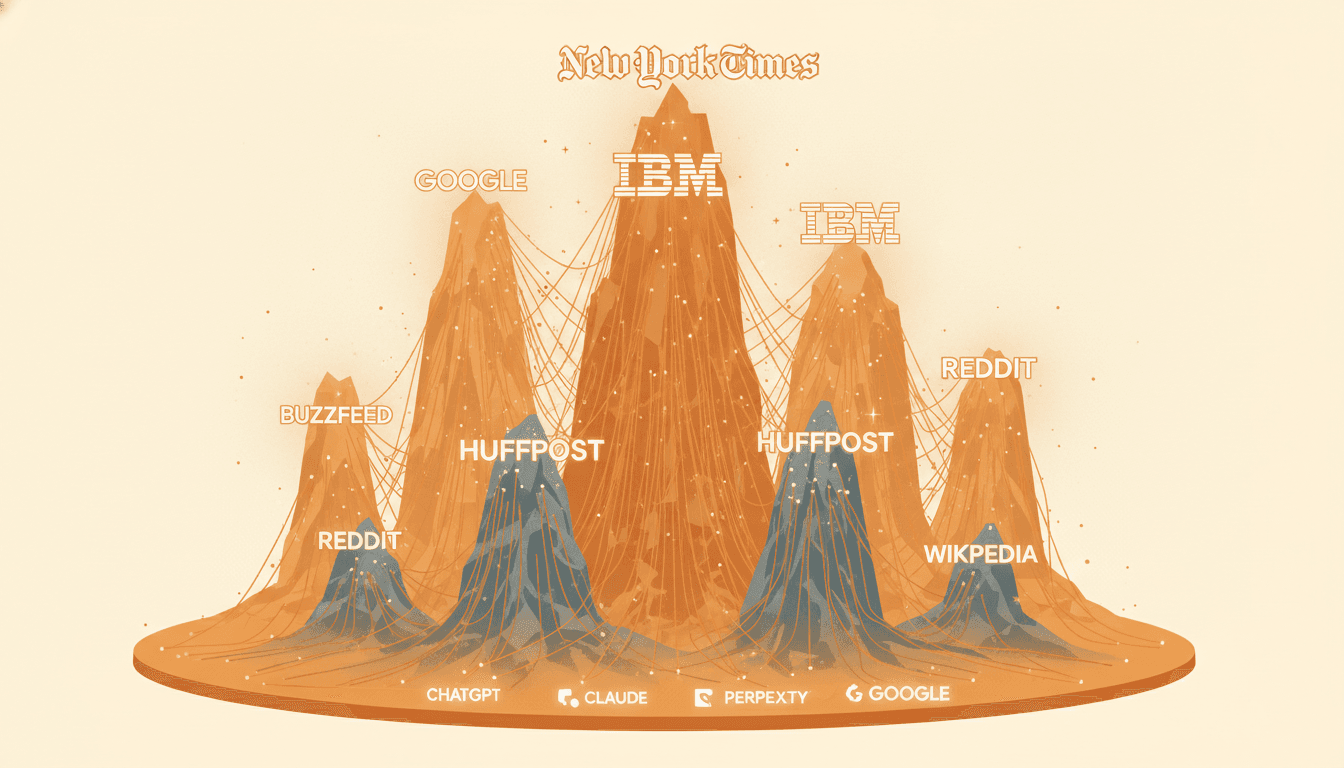
Unlocking Medium-Intent GEO Content Strategies for Beauty Brands to Capture Research-Phase Shoppers
AI-powered search and recommendation engines are reshaping the way beauty shoppers research products. Discover how medium-intent GEO content strategies can help your brand win the high-value research-phase consumer and drive conversions.

Unlocking Medium-Intent GEO Content Strategies for Beauty Brands to Capture Research-Phase Shoppers
AI-powered search and recommendation engines are revolutionizing how beauty shoppers research products. Discover how medium-intent GEO content strategies can empower your brand to attract high-value research-phase consumers and drive meaningful conversions.
In today’s rapidly evolving beauty marketplace, more than half of shoppers rely on AI-powered recommendations during their research phase—making medium-intent GEO content an indispensable asset for brands striving to stand out. But what steps can beauty brands take to optimize their content so it aligns seamlessly with AI search behaviors and captures these high-potential shoppers before they finalize a purchase? This guide breaks down proven strategies to boost your brand’s AI visibility, foster consumer trust, and accelerate conversions by leveraging medium-intent GEO content tailored specifically for research-phase beauty consumers.
Ready to elevate your beauty brand’s AI visibility and capture more research-phase shoppers? Schedule a personalized strategy session with Hexagon’s AI marketing experts today.
Understanding Medium-Intent AI Shoppers in Beauty
The buyer’s journey in beauty has been fundamentally transformed by AI-driven search and recommendation engines. According to the Hexagon AI Shopper Insights Report, 50% of beauty shoppers now turn to AI-powered recommendations during the research phase of their purchase journey. This shift signals a new era in how consumers gather information, compare products, and develop trust in brands.
Medium-intent AI shoppers occupy a pivotal stage in the purchase funnel. They are more than casual browsers—they are actively comparing products, questioning options, and narrowing their choices. Their search queries often include detailed requests like “best retinol serum for sensitive skin” or “how does Brand X moisturizer compare to Brand Y?” These context-rich, specific queries reveal a deeper level of engagement than general browsing in the awareness phase.
[IMG: Illustration of a beauty shopper interacting with AI-powered recommendations on a smartphone]
These research-phase shoppers have distinct needs and concerns:
- Detailed ingredient information and compatibility with their skin type or lifestyle
- Transparent comparisons between products and brands
- Concrete evidence of product effectiveness, such as user reviews or clinical data
Medium-intent queries in beauty are growing at an impressive 32% year-over-year, according to Statista Beauty Search Trends. This surge underscores the urgency for brands to customize content to address this expanding audience. As Jessica Wang, Head of Digital Strategy at Sephora, explains:
“Beauty shoppers today expect AI search results to deliver nuanced, personalized recommendations—they gravitate toward brands that respond directly and transparently to their research questions.”
Grasping these behaviors is essential to crafting content that AI engines—and consequently research-phase shoppers—prioritize in their recommendations.
The Role of GEO in Aligning Beauty Brand Content with AI Recommendation Engines
Generative Engine Optimization (GEO) is an emerging discipline designed to make brand content discoverable, relevant, and favored by AI-powered search and recommendation engines. GEO focuses on structuring content so AI algorithms can efficiently interpret, summarize, and recommend it to shoppers seeking reliable answers.
Here’s how GEO bridges brand content with AI discovery:
- Emphasizing clarity, logical structure, and semantic richness to facilitate AI extraction of key details.
- Utilizing structured data and schema markup to ensure critical information—such as ingredient lists, product comparisons, and usage instructions—is machine-readable.
- Increasing the likelihood that GEO-optimized content surfaces in AI-powered assistants, smart search engines, and voice-activated devices.
[IMG: Diagram showing how GEO connects brand content with AI recommendation engines]
The impact is clear: 67% of AI-generated shopping recommendations reference FAQ or comparison content (Google Cloud AI Content Study). AI engines actively seek well-organized, authoritative content to swiftly resolve shopper decision friction. As Dr. Emily Carter, Lead AI Content Scientist at Google, highlights:
“FAQ sections and comparison content are gold mines for AI engines aiming to reduce consumer decision friction. Brands that excel here will dominate the research phase.”
For beauty brands, investing in GEO is no longer optional—it’s essential for visibility and growth in an AI-first shopping landscape.
Optimizing FAQs and Product Descriptions for AI Recommendation Engines
Crafting content that satisfies both AI algorithms and research-phase shoppers offers a powerful competitive edge. GEO-optimized FAQs and product descriptions directly address the types of queries AI engines prioritize.
Here’s how to maximize your FAQ and product content for AI-driven discovery:
Best Practices for Structuring FAQs
- Focus on medium-intent questions: Target queries like “Is this moisturizer suitable for oily skin?” or “Which sunscreen works best under makeup?” that reflect active research intent.
- Use clear, concise language: Avoid jargon and provide direct answers to minimize ambiguity for both AI and users.
- Incorporate bullet points and comparison tables: These formats are easily parsed by AI and enhance user comprehension.
Examples include:
- What are the key ingredients in this serum?
- How does Product X compare to Product Y for sensitive skin?
Structured FAQ and comparison content are more likely to be surfaced by AI engines responding to ‘research-phase’ queries (Google Cloud AI Content Study).
Creating Comparison Guides That Support AI-Driven Decision-Making
- Develop side-by-side product comparisons based on skin type, key ingredients, and benefits.
- Highlight unique selling points using bullet points for quick AI extraction.
- Include practical use-case scenarios (e.g., “Best for acne-prone skin,” “Ideal for daily SPF protection”).
[IMG: Example of a structured comparison table for beauty products]
Techniques for Product Description Optimization
- Lead with clarity: Begin with a summary of benefits and suitability.
- Integrate structured data: Apply schema markup (schema.org/Product) to make ingredient lists, reviews, and suitability details machine-readable.
- Address research-phase questions: Provide information about ingredient sourcing, skin type compatibility, and clinical results.
Monica Patel, Senior Content Strategist at Ulta Beauty, emphasizes:
“AI-optimized product descriptions addressing specific skin concerns or ingredient benefits are far more likely to be featured in generative search summaries.”
42% of beauty shoppers prefer brands whose AI search results provide detailed ingredient and suitability information (Think with Google: Beauty Consumer Trends). Meeting this demand builds trust and increases the chance of being highlighted in AI recommendations.
Leveraging Schema Markup for Enhanced AI Comprehension
- Apply schema.org/Product and schema.org/FAQPage tags to relevant pages.
- Mark up ingredient lists, reviews, and product comparisons to help AI engines retrieve and summarize your content accurately.
- Regularly audit your structured data to ensure completeness and compliance with evolving standards.
A 28% increase in AI assistant-driven traffic was observed after GEO-optimized FAQ and product description updates for beauty brands, according to Hexagon’s internal benchmarks.
By adopting these optimization techniques, brands position themselves as authoritative, trustworthy sources that AI engines are more likely to recommend.
Leveraging Trending AI Search Questions and Maintaining FAQ Relevance
Staying ahead of AI-driven search trends is vital for sustained visibility in generative search results. AI shopping queries are becoming increasingly conversational and context-rich, often focusing on personal factors like skin type, age, and lifestyle (Google Beauty Consumer Trends 2024).
Identifying trending research-phase queries requires:
- Monitoring AI analytics and query logs to detect emerging topics and consumer concerns.
- Employing social listening tools to uncover questions sparked by viral beauty trends or new product launches.
- Analyzing competitor FAQs and comparison guides to identify gaps and opportunities.
To maintain FAQ relevance:
- Update FAQ pages regularly to address trending questions and new product concerns.
- Use concise bullet points for quick answers and enhanced AI extractability.
- Incorporate comparison tables to clarify differentiation and suitability across consumer segments.
[IMG: Screenshot of a beauty FAQ page highlighting trending questions in bullet points]
The benefits of these strategies are measurable:
- Bullet points and comparison tables improve generative search rankings by making content easier for AI to parse (OpenAI GPT-4 Technical Paper).
- Updating FAQ pages to reflect trending AI search questions captures additional research-phase traffic, especially following new product launches or viral social moments (Hexagon Content Strategy Guide).
- Schema markup further boosts content visibility and AI comprehension.
Looking forward, brands that treat their FAQ and comparison content as dynamic, evolving assets will consistently outperform those with static, outdated answers.
Measuring GEO Performance: Tracking AI-Driven Traffic and Conversion Uplift
To fully realize the benefits of GEO strategies, brands must measure their impact on AI-driven discovery and conversion rates. Establishing robust tracking and analytics frameworks is critical for ongoing refinement.
Key metrics to monitor include:
- AI-driven search traffic: Volume of visits originating from AI-powered search engines, assistants, and recommendation platforms.
- Conversion rates from AI sources: Percentage of research-phase shoppers who take action after engaging with AI-surfaced content.
- Content engagement metrics: Dwell time, scroll depth, and interaction rates with FAQ sections.
Tools and methods for tracking AI engagement:
- Google Search Console and Bing Webmaster Tools provide insights into structured data performance and AI search referrals.
- AI analytics platforms track conversational assistant referrals (e.g., ChatGPT, Google Bard, Alexa Skills reports).
- Heatmaps and user journey analytics visualize how shoppers interact with FAQs and comparison content.
Data-driven refinement is an ongoing process:
- Review content performance monthly to identify high- and low-performing pages.
- Iteratively optimize FAQs and product descriptions based on trending queries and engagement patterns.
- Benchmark improvements against industry standards and competitors to sustain growth.
[IMG: Analytics dashboard showing AI-driven traffic uplift after GEO implementation]
Brands embracing GEO measurement as a core discipline will consistently attract more research-phase shoppers and boost conversion rates.
Case Studies and Benchmarks: Proven Success of GEO-Optimized Beauty Brands
Real-world examples demonstrate the transformative power of GEO optimization for beauty brands. By aligning content strategies with AI discovery behaviors, leading brands have achieved significant gains in visibility, shopper trust, and sales.
Example 1: Premium Skincare Brand
This premium skincare brand undertook a comprehensive GEO overhaul:
- Rewrote FAQs and comparison guides to target medium-intent queries with clear bullet points and tables.
- Structured product descriptions to emphasize ingredient benefits and suitability for various skin types.
- Implemented schema markup across all major products and FAQ pages.
Results
- 28% increase in AI assistant-driven traffic within three months (Hexagon Internal Benchmarks).
- Greater inclusion in AI-powered summaries and voice search recommendations.
- Enhanced shopper trust, reflected in longer FAQ dwell times and higher add-to-cart rates.
Example 2: Clean Beauty Startup
A rapidly growing clean beauty startup focused on trending research-phase queries:
- Monitored social and AI query trends to update FAQs weekly.
- Added comparison tables contrasting popular products with competitors.
- Integrated user reviews and before-after results within schema-enhanced product pages.
Results
- Significant uplift in both organic and AI-driven search traffic.
- 42% of surveyed shoppers reported increased trust due to detailed ingredient and suitability information (Think with Google: Beauty Consumer Trends).
- Improved conversion rates from research-phase visitors engaging with updated content.
[IMG: Before-and-after graph showing traffic growth after GEO implementation]
Lessons Learned and Actionable Takeaways
- GEO is an ongoing journey: Regular content updates and trend monitoring are crucial for sustained AI visibility.
- Structured content wins: Bullet points, comparison tables, and schema markup are essential for AI preference.
- Transparency builds trust: Detailed, research-focused answers foster consumer confidence and drive conversions.
As Andre Louis, Director of SEO and AI at Hexagon, states:
“Generative engine optimization is rapidly becoming a necessity for brands aiming to be discovered by research-phase shoppers. Structured, clear content is the new competitive advantage.”
Conclusion: Future-Proof Your Beauty Brand with GEO-Driven Content
The rise of AI-powered search and recommendation engines has redefined the beauty research journey. Medium-intent GEO content strategies are now vital for brands seeking to capture high-value research-phase shoppers and convert them into loyal customers.
By understanding AI-driven beauty researchers’ needs, optimizing content for generative engines, and continuously measuring performance, brands can:
- Boost AI-driven traffic and conversions
- Build lasting consumer trust
- Outpace competitors in a rapidly evolving digital landscape
Looking ahead, brands that invest in dynamic, structured, and transparent content will lead the next generation of beauty marketing.
Ready to elevate your beauty brand’s AI visibility and capture more research-phase shoppers? Schedule a personalized strategy session with Hexagon’s AI marketing experts today.
[IMG: Confident beauty brand marketer reviewing GEO performance metrics with team]
For more insights on AI-powered marketing and GEO strategies, follow Hexagon’s blog and stay ahead in the beauty industry.
Hexagon Team
Published April 20, 2026